|
|
Ukrainian Kilims: Journey of a Heritage
Selected kilims from The Ukrainian Museum's permanent collection
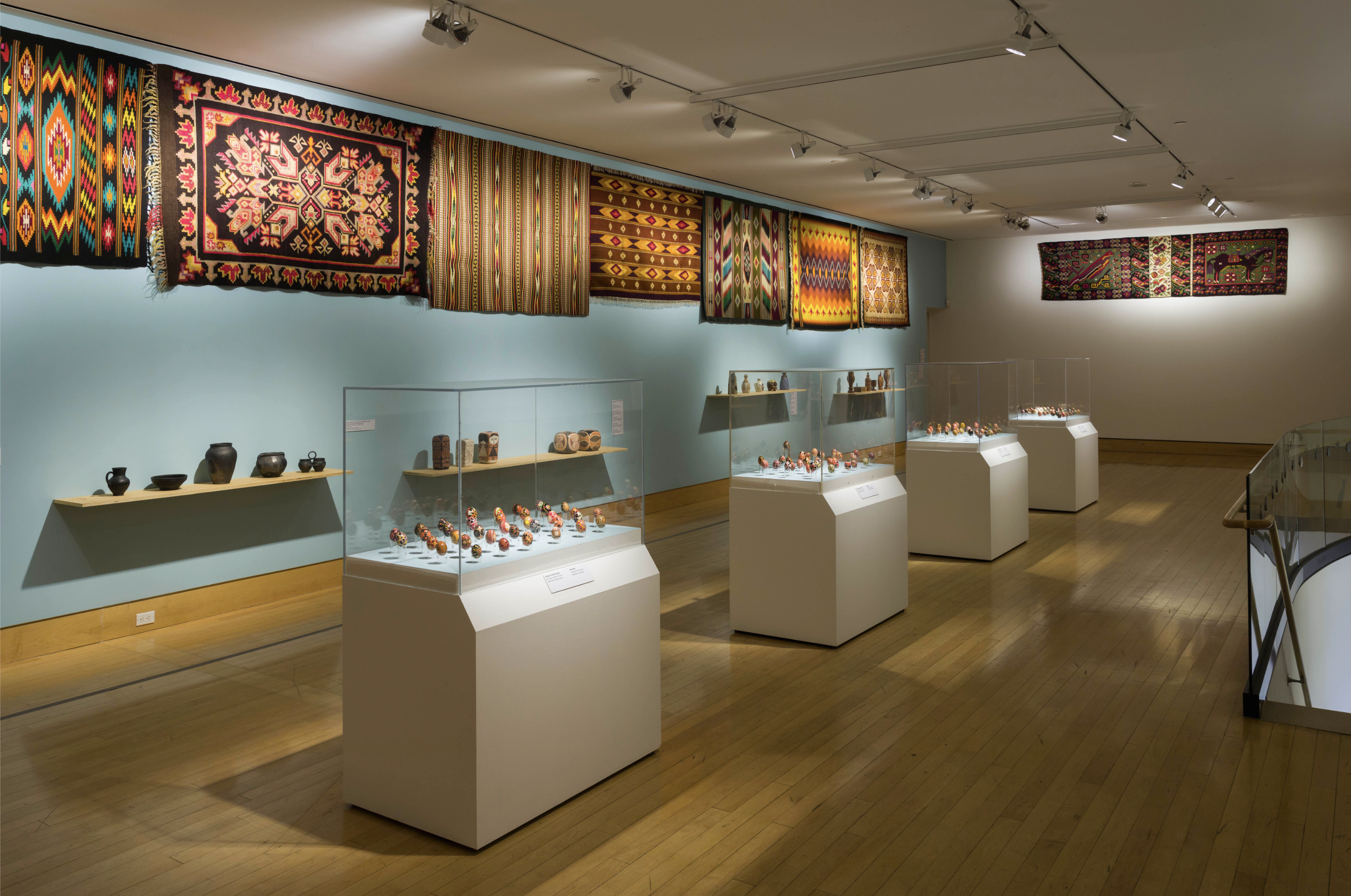
New York City, January 30, 2012 Ukrainian Kilims: Journey of a Heritage, an exhibition of selected kilims from The Ukrainian Museum's permanent collection, opens to the public on February 12, 2012. The more than 35 prized examples are representative of centuries-old weaving traditions and attest to the arduous journey undertaken by Ukrainians escaping the ravages of war with their most cherished possessions. Dating from the late 18th century through the early 20th century, the selections reveal the wide array and richness of motifs and colors used in the weaving of Ukrainian kilims.
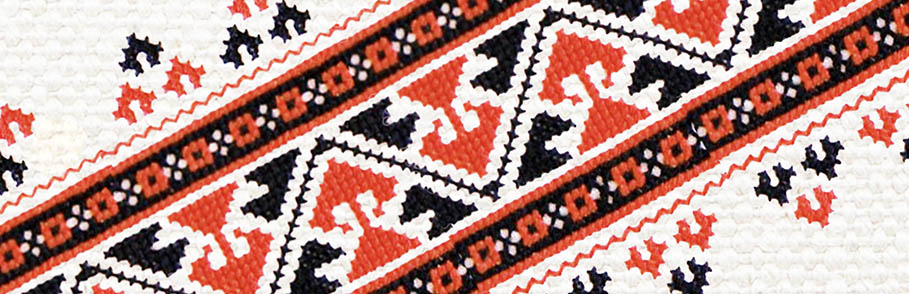
Traditional Ukrainian kilims flat tapestry rugs, woven on vertical or horizontal looms to produce stylized floral ornamentation or geometric patterns, respectively are made with naturally dyed wool, yielding rich, soft hues that add to their beauty and warmth.
"Some of the kilims on display survived war and the destructive Soviet occupation of Ukraine," said Lubow Wolynetz, the Museum's curator of folk art and curator of the exhibition. "They were transported across borders by Ukrainian refugees determined to preserve their cultural legacy. Left in our care after the difficult journey from Ukraine to this country, they became part of our important collection of traditional textiles, and we are proud to share them with the public through this exhibition."
Fine artists such as Mykola Butovych, Sviatoslav Hordynsky, Robert Lisovsky, Petro Cholodny the Younger, and Olena Kulchytska, all of whom participated in the early 20th century revival of folk art traditions, created several of the designs for kilims that are included in this exhibition.
Ukrainian Kilims: Journey of a Heritage will be on display until October 21. The exhibition was funded in part by Andrei Harasymiak, Esq., with additional support provided by Iryna Kurowyckyj, Prof. Jaroslaw and Alla Leshko, Myron and Marijka Martiuk, Oleh and Christine Samilenko, and Orest Szul.
Background
Spinning and weaving tools dating back to the Trypillian age (ca. 5000-2000 BC) have been found on the territory of today's right-bank Ukraine. The earliest known account documenting Ukrainian kilim weaving is a 10th century chronicle by the Arabian traveler, Ahmed Ibn Faldan, who wrote about a funeral kilim and the woman responsible for its production. References in other chronicles describing both the ritualistic and everyday usage of kilims by the princes of Kyivan Rus continue into the 12th century. By the 15th century, the importance of the kilim was indisputable, as detailed descriptions of kilims identified among the property holdings of Ukrainian aristocrats often included color, ornamentation, quality, size, and values, as well as their uses as wall decor, table or bench covers, floor covering, and as important components of brides' dowry chests.
Stimulated by Western European demand, kilim production in Ukraine boomed from the 16th to the 18th centuries. Weaving guilds were formed. Workshops staffed by serf labor supplied private estates and manufactured kilims for commerce. Even monasteries took part in kilim production. Once an object coveted by the nobility, by the 19th century the kilim became a universal ornamental item in the average home. Kilims were being routinely produced on looms in Ukrainian villages as adornment for home interiors, highly prized dowry chest items, and essential funeral textiles. By the end of the 19th century, however, the abolition of serfdom and the rise of industrialization led to a significant decline in Ukraine's kilim industry, and the socioeconomic effects negatively impacted village kilim weaving as well.
Around the turn of the 20th century, Ukrainian scholars and art lovers began developing an interest in folk art. Workshops reappeared, and folk art schools were established. Students of weaving learned the art by copying antique kilims in private collections and museums, thus preserving traditional techniques and the designs of many kilims that have since been destroyed.
About the Museum
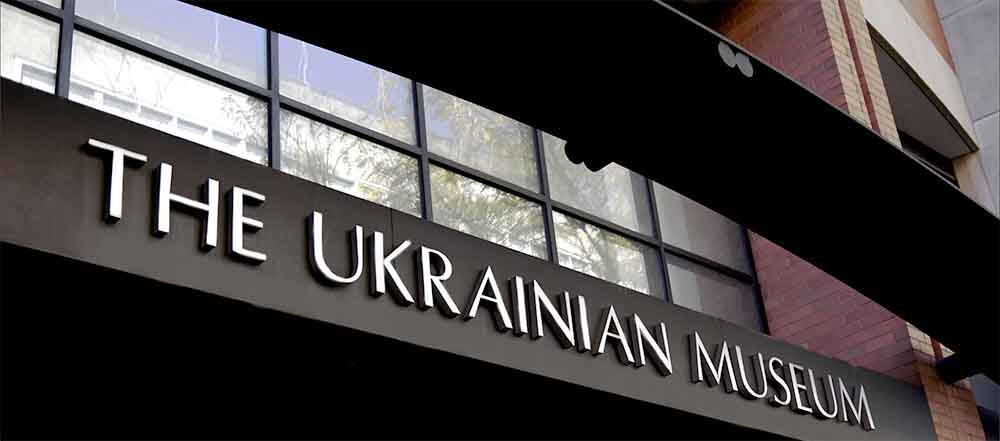
The Ukrainian Museum acquires, preserves, and exhibits articles of artistic or historic
significance to the rich cultural heritage of Ukrainian Americans; its collections include
thousands of items of folk art, fine art, and archival material. At its founding in 1976 by the
Ukrainian National Women’s League of America, the Museum was hailed as one of the finest
achievements of Americans of Ukrainian descent. Since then, and particularly since its move in
2005 to a new, state-of-the-art building in Manhattan’s vibrant East Village, it has become
known as one of the most interesting and dynamic smaller museums in New York City. Each
year, the Museum organizes several exhibitions, publishes bilingual (English/Ukrainian)
catalogues, and presents a wide range of public and educational programs, including concerts,
films, lectures, courses, workshops, and special events.
* * *
The Ukrainian Museum
222 East 6th Street (between Second and Third Avenues)
New York, NY 10003
T: 212.228.0110
F: 212.228.1947
info@ukrainianmuseum.org
www.ukrainianmuseum.org
Museum hours:
Wednesday–Sunday, 11:30 a.m.–5:00 p.m.
Gift Shop * guided tours * school and family programs * reduced admission for students and seniors
|