|
|
T h e U k r a i n i a n M u s e u m 222 East 6th Street (bet. 2nd and 3rd Aves.) New York, NY 10003 Wed. thru Sun. 11:30 am - 5:00 pm (212) 228-0110 * e-mail: info@UkrainianMuseum.org |
|
Newsletter on the Web
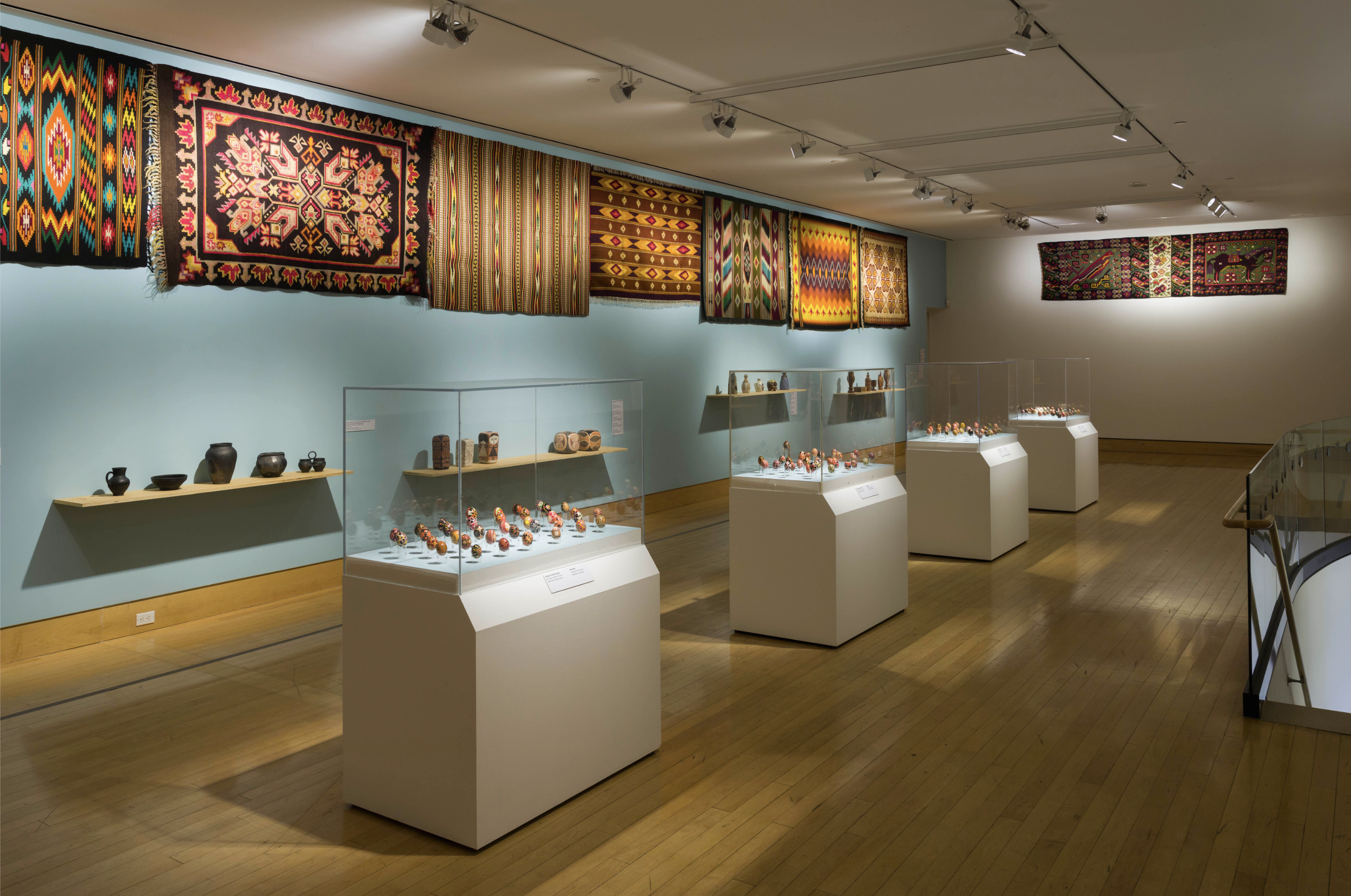
Ukrainian Folk Art from the 1933 Chicago World's Fair The Ukrainian Museum at 222 East 6th Street in New York City is proud to present the exhibition Thread to the Past: Ukrainian Folk Art from the 1933 Chicago World's Fair. The exhibition will open on October 12, 2007, and will be on view through May 4, 2008.
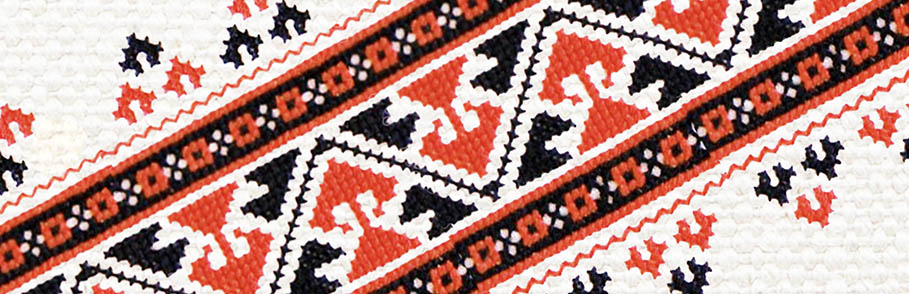
Featured in this show is a group of folk art objects that originally were part of an exhibition of Ukrainian folk art presented in the Ukrainian pavilion at the Chicago World's Fair in 1933. In 1976, at the founding of The Ukrainian Museum in New York City by the Ukrainian National Women's League of America, these objects formed the core of the Museum's folk art collection. On view are full costumes, parts of costumes, embroidered and woven textiles, kilims, embroidered home decorative items such as drapes and tablecloths, ceramics, woodcarved decorative objects, and pysanky (Ukrainian Easter eggs). Archival photographs of the Ukrainian pavilion, the exhibitions, and the cultural programs that were presented to the public bring into context the remarkable achievement of Ukrainian immigrants in organizing and funding this project. A bilingual, illustrated catalogue accompanies the exhibition. The curator of the exhibition and author of the catalogue is Lubow Wolynetz, curator of the Museum's folk art collection. The Chicago World's Fair of 1933 was conceived to celebrate the centennial of the city of Chicago and was named "A Century of Progress." It came at a time when the country was experiencing its worst economic disaster - the Great Depression. In a spirit of hope for a brighter future and as a testament to the initiative of the people of the United States, the Fair offered tribute to innovations in science and industry and celebrated great achievements in the arts. It aimed to offer healing to the nation by looking ahead at possibilities and opportunities in every field of endeavor, which have always been the hallmark of this country. "Thread to the Past is a historical exhibition, and The Ukrainian Museum is very proud of its unique link to the past, which highlights our warm kinship with the Ukrainian National Women's League of America," says Museum Board President Olha Hnateyko. In 1933 the UNWLA, then a young organization of Ukrainian women in the United States whose objective was to maintian their cultural identity through social and cultural programs, took upon itself the responsibility of organizing the folk art exhibition in the Ukrainian pavilion at the World's Fair. Toward that end the UNWLA formed a committee, chaired by Olena Lototsky, president of the organization. The decision was made to purchase a representative collection of folk art from the Ukrainian Folk Art Cooperative in L'viv, which sent Stefania Chyzhovych (Pushkar) as a liaison and advisor to the exhibition. "By today's standards, the purchase made in 1933 (the cost was $2,225) was a modest investment, but by any standards it yielded an incredibly rich harvest," says curator Lubow Wolynetz, referring to the founding of The Ukrainian Museum and its 30+ years of successful operations. Following the closing of the World's Fair, the folk art collection was maintained by the UNWLA and used by the organization's branches throughout the country for local displays in libraries, schools, and community centers, aimed at introducing the Ukrainian cultural heritage to the general public. Some new folk art objects were added as time went on, but with use and the lack of professional management and care, the collection was in danger of deteriorating and losing its value. "It became clear that, in order to preserve the collection, it would have to be displayed as a permanent exhibition or housed in a museum," explains Ms. Wolynetz.
After World War II, a new wave of Ukrainian immigrants came to the United States - among them many intellectuals, artists, and teachers. In the aftermath of the war, Soviet isolationism created a disturbing political configuration, thus closing Ukraine to any contact with the West. The new Ukrainian immigrants, faced with a permanent break with their native land, saw the preservation of their cultural heritage in the new homeland as a necessary and important undertaking. This prevailing social climate within the Ukrainian community and concern about the future of the folk art collection in its care provided the impetus for the UNWLA to take a definitive course of action. In 1967 the organization made an arrangement with the Ukrainian Institute of America, which allowed the collection to be housed and displayed on the top floor of its landmark building on New York's Fifth Avenue. Although this arrangement lasted only a few years, it brought benefits. According to Ms. Wolynetz, many people began to donate their heirloom objects to the collection, which they had brought from their homeland; ethnographer Oksana Grabowicz was hired to begin the process of professionally documenting and cataloguing the collection; and the leadership of the UNWLA realized that only a professional museum in its own facility could ensure the longevity of the collection and serve as a center for exhibitions, education, and research. The UNWLA, under the dynamic leadership of its president, Iwanna Rozankowsky, succeeded in its intent through an intense and nationwide fundraising and marketing campaign to which the Ukrainian community responded readily and with great commitment. In 1976 the organization purchased a building together with the Ukrainian Congress Committee of America, in which The Ukrainian Museum first opened its doors to the public - its own home for the following 29 years. In 2005 the Museum relocated to a spacious, newly built, modernly appointed facility, fully funded by generous donations from the Ukrainian community nationwide. "The exhibition Thread to the Past brings us in a full circle of remarkable events through time and several generations," says Maria Shust, Director of The Ukrainian Museum. "The two exhibitions, Ukrainian folk art and the works of master sculptor Alexander Archipenko, showcased in the Ukrainian pavilion at the Chicago World's Fair, played extraordinary roles in the history of our institution. The folk art formed the nucleus of our folk art collection, and in 2005 we inaugurated our beautiful new building with a magnificent exhibition of Archipenko's sculptures," explained the Director. According to curator Lubow Wolynetz, almost 2 million people visited the Ukrainian pavilion during the 1933 World's Fair. "The Ukrainian pavilion was the only one at the World's Fair not built with the financial support of an independent national government," she explains. (During the 1930s, Ukraine was under the domination of two foreign powers - the Soviet Union in eastern Ukraine, and Poland in the western lands.) The appeal for funds to build the pavilion and underwrite the presentation of exhibitions and programs was aimed at Ukrainians worldwide, but the project was accomplished mostly with the financial support and cooperation of the Ukrainian community in the United States. The marketing, fundraising, and organizational demands were tremendous, and the success of the pavilion, its exhibitions, and programs made it an extraordinary achievement for Ukrainian Americans, given the dire economic conditions of that time. "The exhibition Thread to the Past shows how strong the thread of continuity really is," says Board President Olha Hnateyko. "today, as in the past, we aim for the same results - to preserve the Ukrainian experience, its rich culture and proud history, to pass it on to future generations, and to share it with our neighbors and friends." |
Top of page
Copyright ©1997-2008 The Ukrainian Museum; all rights reserved.
|